
Ask your agent how that app works
REA looks inside apps, Concat gives agents a video timeline, and XERJ helps them find the right code.
10-17 October 2026. Edition 4. Star counts come from LLMRepos daily snapshots; GitHub counts may have changed.
Ever clicked a feature and thought, 'How did they build that?' The answer is usually hidden behind the interface. This week, REA gives your agent tools to investigate.
My pick is REA. It turns a vague question about an app into an investigation with evidence you can inspect. Start with one feature in an app you own and ask the agent to show its working.
Then there's Concat for editing the demo, XERJ for finding the right code, Magpie for juggling models, and a market-data model that still draws interest after six months without a commit.
This week's picks
morluto/rea
What does that compiled app actually do? REA gives agents tools to inspect native binaries, JavaScript and Electron apps, and other targets, returning findings with supporting evidence. It added 239,845 stars (+442.3%) to reach 294,072 in our snapshot window.
A useful first target is an old Electron app of your own: ask for a map of its modules and how one feature fits together. Static JavaScript analysis needs no native analysis engine. Binary work needs additional tools such as Hopper, Ghidra or IDA, depending on the target.
The README draws an important boundary: analysis runs locally, but your agent receives the results and its model provider has its own data policy.
jub0t/Concat
Concat combines a conventional editing timeline with local captioning, text-to-speech and an API for scripts and agents. Created 25 August, it reached 7,811 stars by 17 October, up 3,261 over the week.
For builders making product demos, that suggests a useful division of labour: automate a rough cut, then open the project and adjust the timing yourself. The edit stays in a workspace you can inspect.
Try one 30-second clip first. The README labels Concat beta. Its AI models need an initial download; a build from source adds gRPC and a command-line tool alongside the JSON-RPC API. Allow time to test the exact workflow you need.
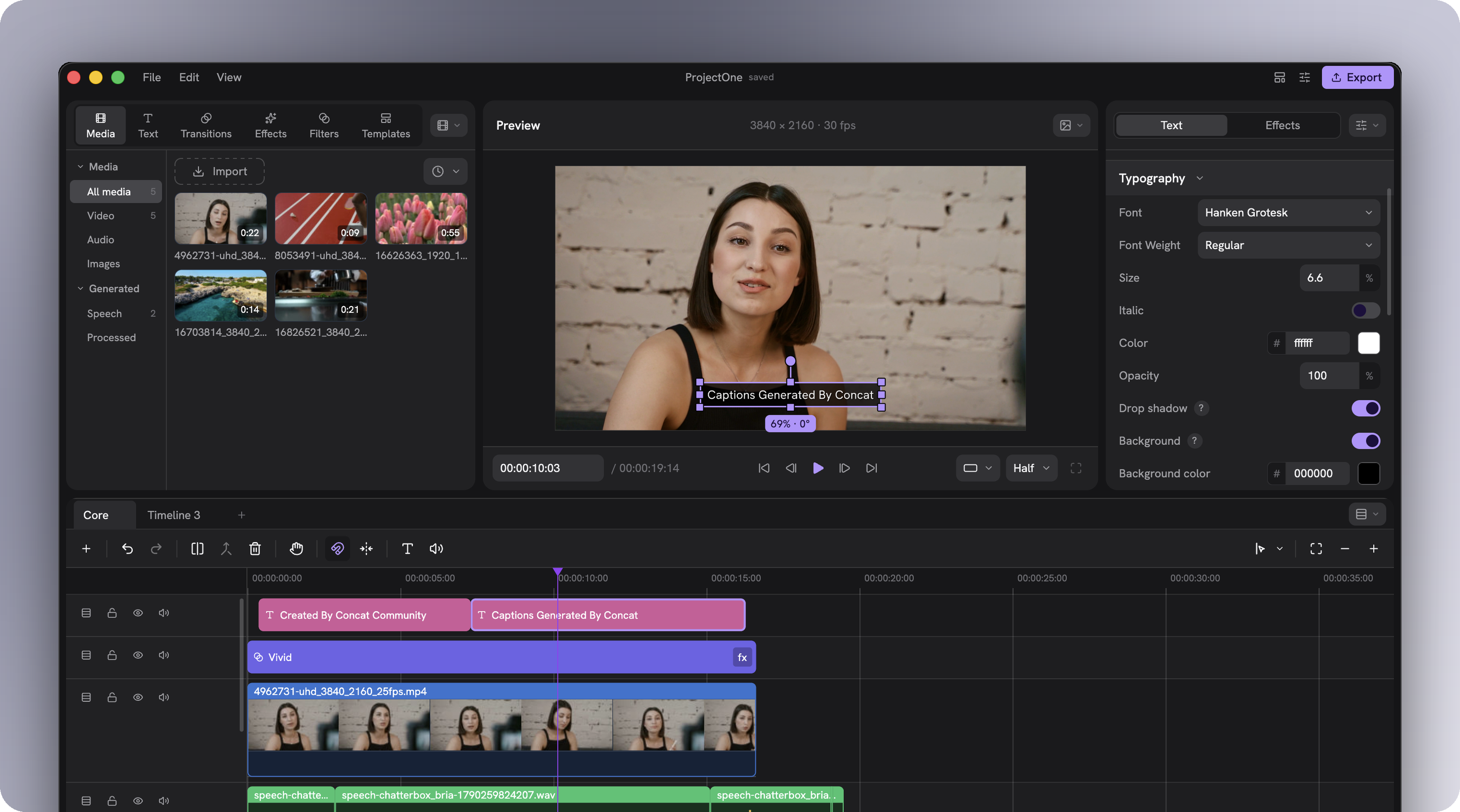
Screenshot: Concat README.
xerj-org/xerj
Your agent has read half the repository. It still hasn't found the function. XERJ indexes code, documents and logs so agents can retrieve relevant passages with file and line references. It gained 3,636 stars (+104.6%) to reach 7,111.
Try it on one project you know well: ask the same three codebase questions with ordinary file search and with the index. Compare whether the answers find the right code, and how much material the agent reads to get there. The project's token-saving figures are maintainer measurements; your own workload is the useful test.
Check the startup instructions: the quick-start --insecure option disables TLS and authentication. Use the documented authenticated setup on a shared host.
yetone/magpie
Every coding agent seems to bring another configuration file. Magpie puts model selection behind one app and a local gateway, translating requests between supported API formats. It gained 6,606 stars (+85.5%) to reach 14,334.
If you switch between agents and providers, try connecting one API-key provider to two agents. Change the model from the menu and check that each new session uses the intended one. Profiles can save the setup for later.
One setting deserves attention first: Magpie can discover existing subscription sign-ins from local files and the Keychain. Its README explains how to disable account discovery; API-key providers still work. A local gateway still sends inference requests to whichever provider you choose.
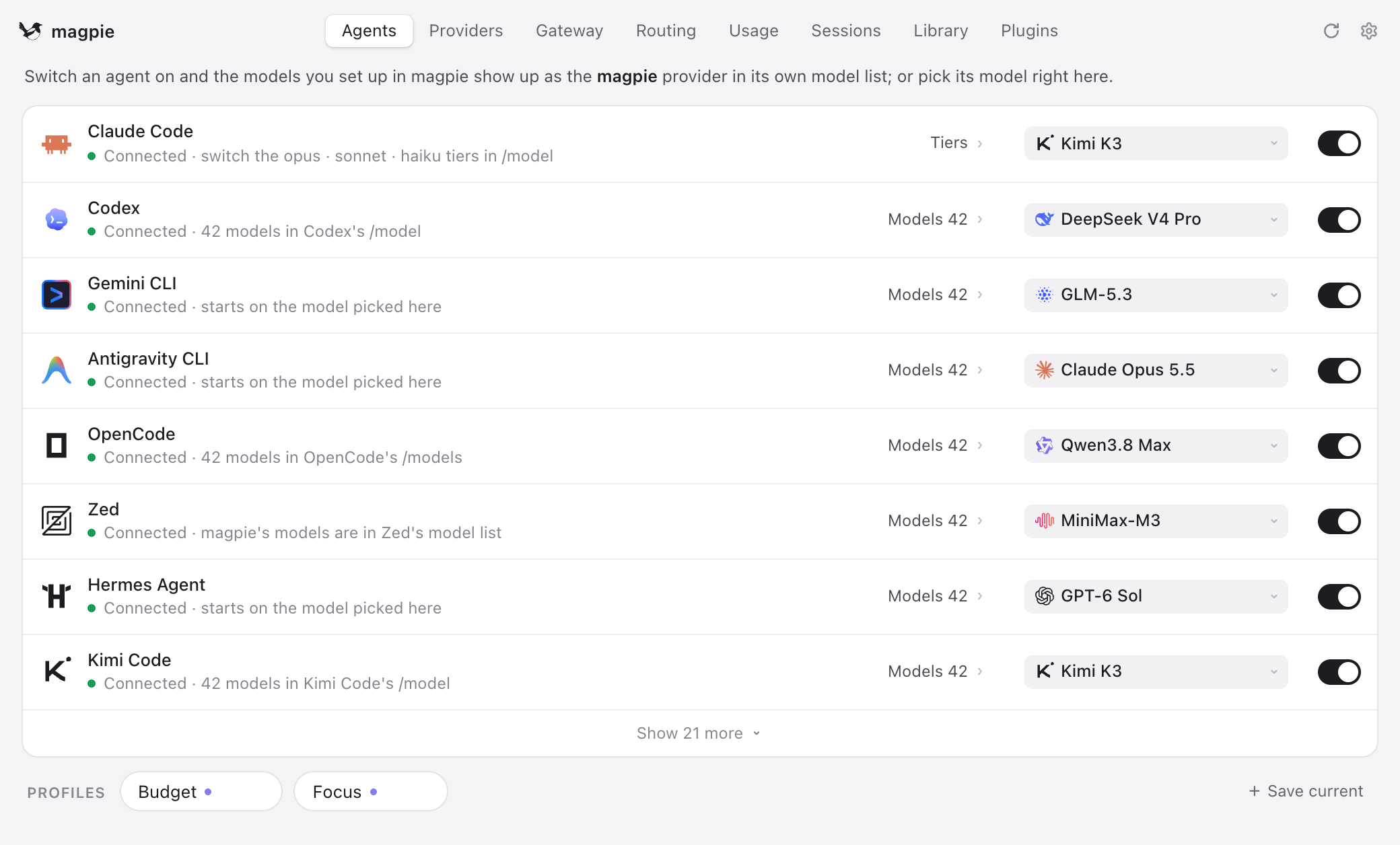
Screenshot: Magpie README.
Quiet but still loved
shiyu-coder/Kronos
Kronos applies a language-model idea to market data: tokenise price-and-volume sequences, then predict what follows. It had 40,852 stars and 186 days since the last commit in the 17 October snapshot, while still gaining 448 stars that week.
For someone studying time-series models, the interesting starting point is its prediction example: compare forecasts with held-out observations and a simple baseline. A convincing-looking chart is only the start of that comparison.
The fine-tuning guide explicitly calls its pipeline a simplified demonstration, rather than a production trading system. Treat it as research code, with the maintenance gap in mind.
Which feature in an app would you most like to understand? If this reached your inbox, reply with one example.
Selection: three risers from different end-date star bands (500-9,999; 10,000-49,999; 50,000+), one project created within 90 days and one with at least 5,000 stars and 180 days without a commit. Growth uses paired observations from completed imports; risers need at least 500 stars at both dates. Editorial choices also weigh practical value. Previous features and duplicate identities are excluded. Stars measure attention, not quality. Read this edition online.
LLMRepos tracks open-source LLM and agent repositories using daily GitHub snapshots.
Get the next edition
Five open-source AI repos worth watching, every Tuesday.
Free weekly digest. Double opt-in, unsubscribe anytime.