
Find the file you only half remember
Kensaku searches inside your files locally, NVIDIA's Auto Ontology tells agents what your data means, and DeepSeek publishes an agent that rations attention.
2-9 November 2026. Edition 8. Star counts come from LLMRepos daily snapshots; GitHub counts may have changed.
You remember the error. You remember it was in a screenshot. You do not remember that the screenshot is called Screenshot 2026-10-14 at 16.02.11.png.
My pick is Kensaku. It is a local search launcher that reads inside documents, code and images, then lets your coding agent query the same index over MCP. Index one folder of logs and screenshots, then search for an error message you only saw as pixels. If that works, you have found a file and given your agent a memory of your disk in one go.
Also this week: an ontology layer so agents stop guessing what "revenue" means, a scraper that waits politely when sites push back, a DeepSeek prototype built to bother you less, and a Godot bridge that has gone quiet.
Moving fastest
yjid/kensaku
Kensaku searches file names, text inside files and rough meaning from one search box. Queries and file contents stay on your machine; the only outbound requests are an update check and optional model downloads. It gained 955 stars (+184.0%) to reach 1,474, a little over two weeks after the repository was created.
The README's "screenshot archaeology" is the test worth running: point it at a folder of screenshots, let OCR finish, then type the error text. Next, add kensaku-cli mcp to your coding agent and ask it to find last week's failed deploy log. The agent tools are read-only by default, and returned file content is labelled as data rather than instructions.
The README is candid about the rough edges. Builds are not yet code-signed, so macOS and Windows will warn on first install, and Windows has had the most real-world testing. The default "meaning" search uses a compact static embedding table, not a neural model at query time. Treat the index as sensitive: it holds your extracted text.
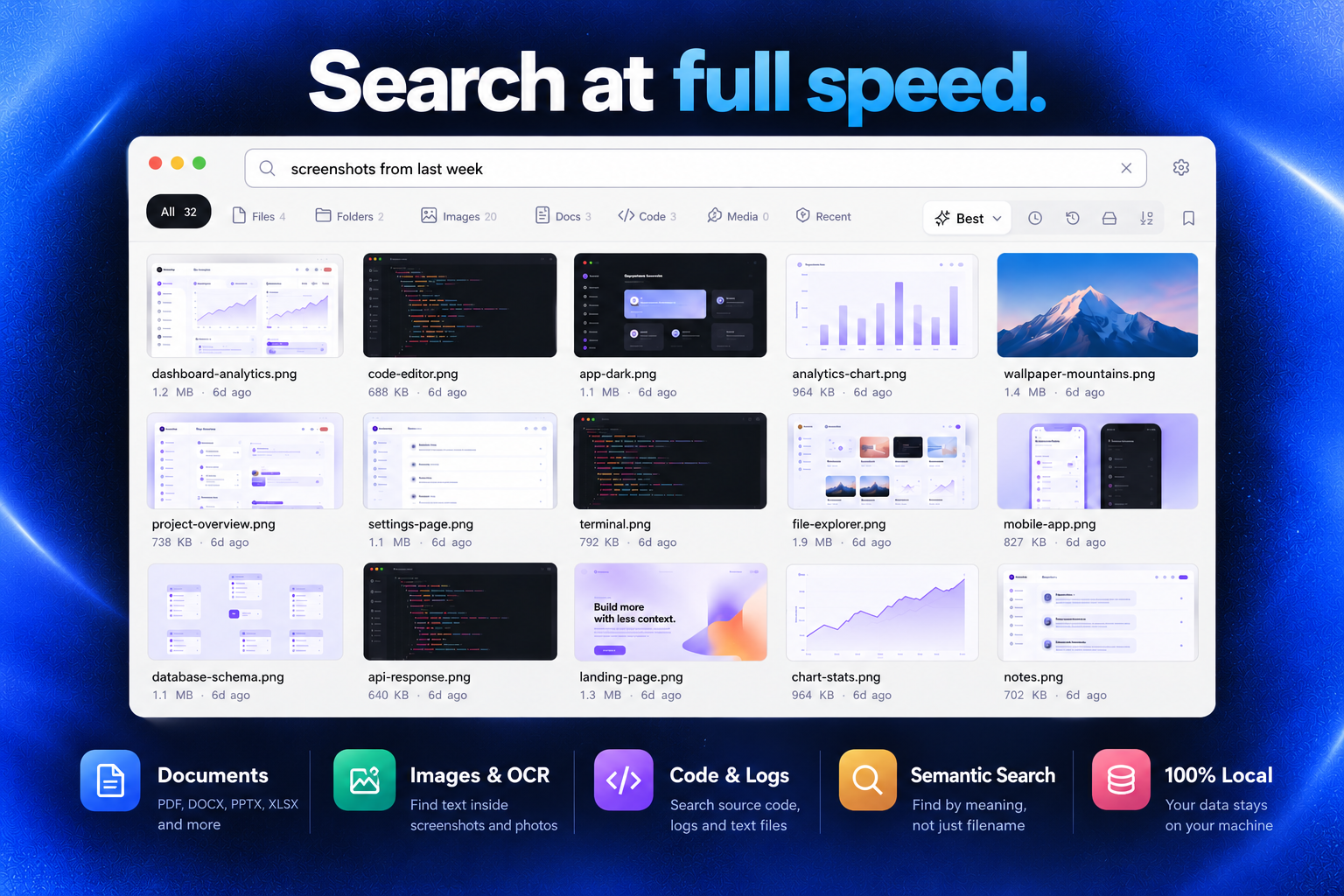
Promotional image: Kensaku README, showing a natural-language time query.
NVIDIA/auto-ontology
Ask three systems for "revenue" and you may get three honest answers. Auto Ontology builds a shared map of what tables, metrics and relationships mean, then serves it to agents through MCP, a CLI and an API so their SQL starts from agreed definitions. It jumped from 718 to 10,870 stars (+1,413.9%), up 10,152.
The quickstart loads Microsoft's Wide World Importers sample database and asks for revenue on one product in one state in one month. The answer comes back with its SQL and the steps behind it. That is the right shape for a first trial on your own data: pick a metric your team already argues about and check whether the generated query uses the definition you would have chosen.
This is a full stack, not a library you drop in: Docker Compose runs Postgres with pgvector, a Next.js front end, two Python services and pgAdmin. The README uses NVIDIA NIM endpoints for models, either hosted with an API key or self-hosted, so with the hosted default your questions and catalogue context go to NVIDIA's API. The project is not accepting external contributions yet.
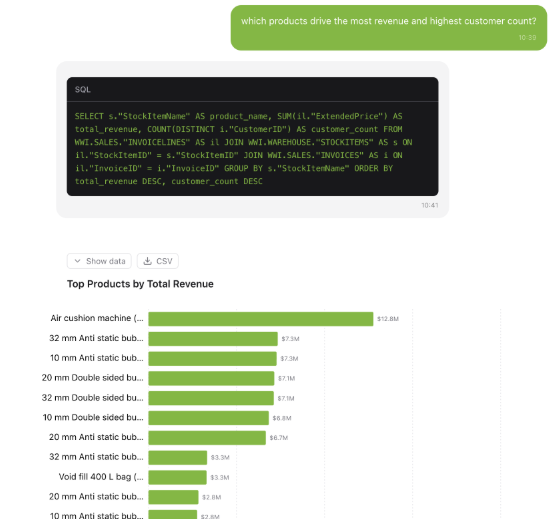
Screenshot: Auto Ontology, answering a question over the Wide World Importers sample data.
D4Vinci/Scrapling
Most scrapers break the day a site renames a CSS class. Scrapling is a Python scraping framework that combines plain HTTP requests, browser rendering, parsing and Scrapy-style crawling, with an MCP server for agents. It added 7,926 stars (+8.6%) to pass 100,000.
Two features make it worth a builder's afternoon. Adaptive element tracking tries to relocate an element after a page changes, and development mode caches responses on the first run so you can rework your parse() logic without hitting the site again. Try both on a page you already scrape, ideally your own.
The README leans hard on bypassing anti-bot systems, and its sponsor list is mostly proxy and unblocking services. Its own disclaimer asks users to follow scraping and privacy law and respect sites' terms. Spider robots_txt_obey defaults to off: switch it on, and let AutoThrottle slow down when a site starts refusing.
New arrival
deepseek-ai/dsh-superagent-prototype
An agent that can act for a whole team can also waste a whole team's attention. dsh-superagent is a coding agent that watches one GitHub repository, takes requests from approved people, works in its own session and answers where it was asked, for example with a pull request. Created 31 October, it reached 21,652 stars, up 9,772 over the week.
Its philosophy document is the part to read even if you never install it. The agent speaks only when someone must act or can use a result, asks one question at a time and starts in an observe mode that records proactive work without doing it. Those are good rules for any team agent, including the one you are building.
The README calls it a research prototype, not an official DeepSeek product, and warns it may contain bugs. It runs as a bundle for DeepSeek Harness and needs Node.js 22.19+, tmux and the GitHub CLI. The setup guide recommends a dedicated GitHub account for the agent, since everything it writes appears under that name.
Quiet but still loved
Coding-Solo/godot-mcp
Game code fails in ways a type checker never sees. Godot MCP lets an agent launch the Godot editor, run a project, read its debug output and create or edit scenes. It had 6,578 stars and 206 days since the last commit in the 9 November snapshot, gaining 105 stars during the week.
The useful loop is short: ask the agent to run a small project, read the error output and propose one fix. That direct feedback is the whole point, and the README installs into Claude Code with one command.
Version 0.1.1 is pinned to an early MCP SDK, and UID tools need Godot 4.4 or later. The README's Cline example auto-approves every tool, including running projects; approve them one at a time instead. Our catalogue tracks several newer Godot MCP servers, so compare one of those if you hit a gap.
What would you want an agent to find on your disk that a filename search never could? If this reached your inbox, reply with one example.
Selection: three risers from distinct end-date star bands (500-9,999; 10,000-49,999; 50,000+), one project created within 90 days and one with at least 5,000 stars and 180 days without a commit. Growth compares paired observations from completed imports on 2 and 9 November; risers need at least 500 stars at both dates. Previous archive features, duplicate identities and permanent editorial exclusions are removed. Editorial choices weigh practical value alongside growth. Stars measure attention, not quality. Read this edition online.
LLMRepos tracks LLM and agent repositories using daily GitHub snapshots.
Get the next edition
Five open-source AI repos worth watching, every Tuesday.
Free weekly digest. Double opt-in, unsubscribe anytime.