
Give your coding agent your design rules
Yogurt takes meeting notes on your computer, Stitch turns UI code into a design brief, and Ryugi lets you comment on mockups.
16-23 November 2026. Edition 10. Star counts come from LLMRepos daily snapshots.
The call ends and everyone remembers the decision. Ask who owns the next step and you get three different answers.
My pick is Yogurt. It turns call recordings into searchable notes on your computer. Try it on a short call with a teammate who agrees to be recorded. Afterwards, ask who owns the next step and follow the answer back to the meeting it cites. That’s a quick way to see whether you’d trust the notes when it counts.
Moving fastest
Innei/ryugi
Ryugi gives coding agents a local browser workspace for mockups, design docs and whiteboards. You can select a design or pin a comment where you want a change, then send that feedback back to the agent. It gained 319 stars (+62.7%) to reach 828.
Ask your agent to put three versions of a settings screen on one artboard. Pick one, pin a comment on the control you want moved and submit the round before it builds the page. Stitch Skills can extract the design rules. Ryugi gives you a place to review how the agent applied them.
The install guide explains how feedback reaches each agent. Some receive updates live. Others read comments when asked. The local app is free to use and proprietary. The skills and integrations are source-available.
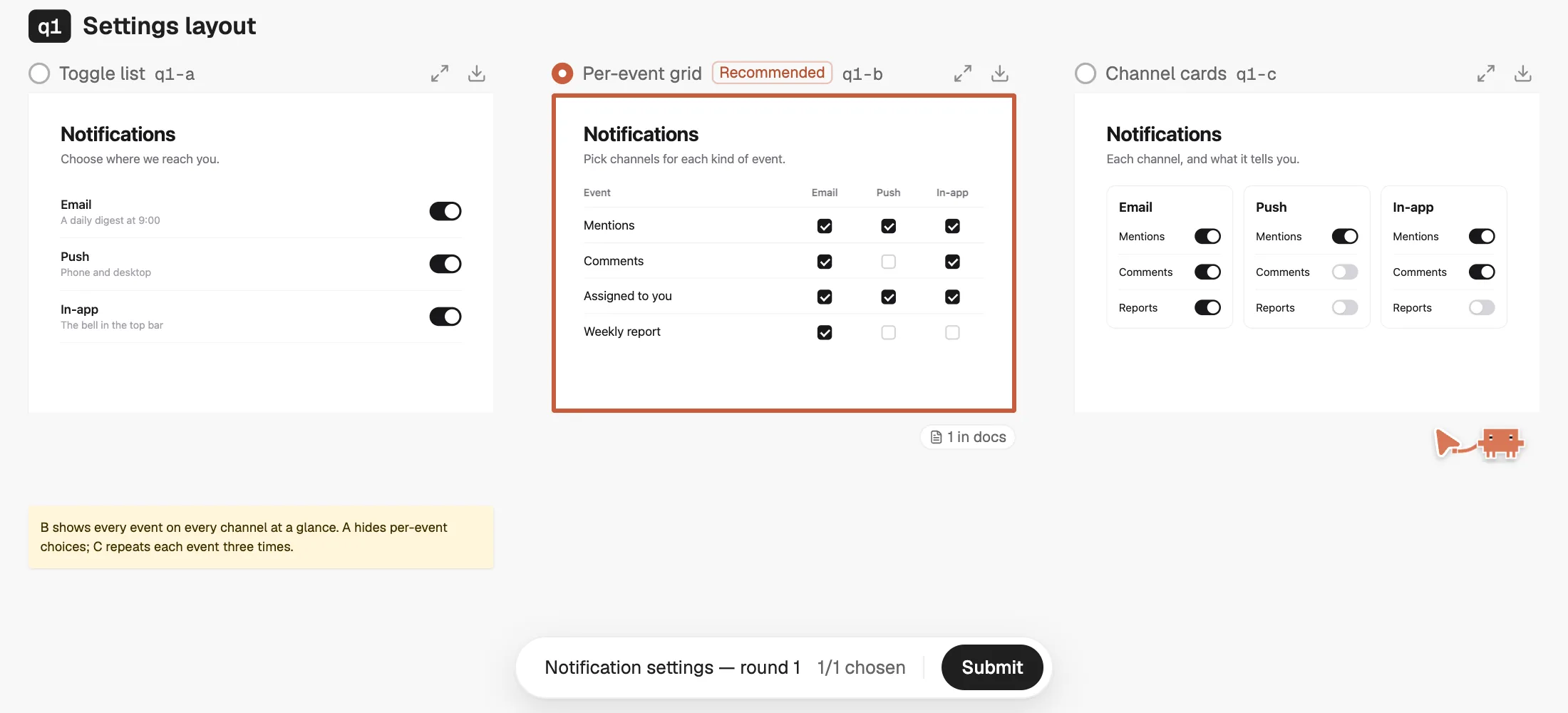
Screenshot from Ryugi.
google-labs-code/stitch-skills
If your product's design rules live in the CSS, a fresh agent has to piece them together on every feature. Google's Stitch skills include a workflow for reading frontend source and writing a DESIGN.md that describes its visual system. The repo added 2,421 stars (+25.1%) to reach 12,084, crossing into the middle band.
Point the source extraction skill at one section of a React or Tailwind app. Ask it to cite the files behind its colour, spacing and button rules. Then give the brief to an agent building an adjacent screen and see which rules you still have to explain.
The extraction reads source without rendering the app, so check the brief against the actual UI, especially responsive layouts and interactive states. The wider plugin suite uses Stitch MCP, which requires a separate setup and credentials.
mvanhorn/last30days-skill
Last30Days is an agent skill that researches a topic across sources like GitHub, Hacker News and Reddit. It turns findings from the past 30 days into a brief with links to the sources. The repo gained 5,065 stars (+7.5%) to reach 73,047.
If you’re upgrading a dependency, the brief can surface problems people are hitting with the version you plan to use. Ask for recent issues and discussions about that version, then open the links and check which problems apply to your setup before adding them to your migration checklist.
The source guide lists which sources need credentials or paid access. Start with public GitHub and Hacker News. A popular thread can point you to a bug worth checking. It cannot tell you how often the bug occurs.
New arrival
FrigadeHQ/yogurt
Yogurt captures call audio, transcribes it and writes meeting notes on your computer. The desktop app can also answer questions across meetings and link to its sources. Created 10 November, it gained 1,216 stars (+67.8%) to reach 3,009.
Record a short practice call with a colleague who agrees to it. Give each person one action item and check whether the exported Markdown gets the names and commitments right. The README says lighter hardware gets smaller transcription models, which can make more mistakes.
Transcription and summaries run offline after the model download. The optional MCP server is off by default. If you enable it, a connected assistant can read meeting data and may send it to its own online model.
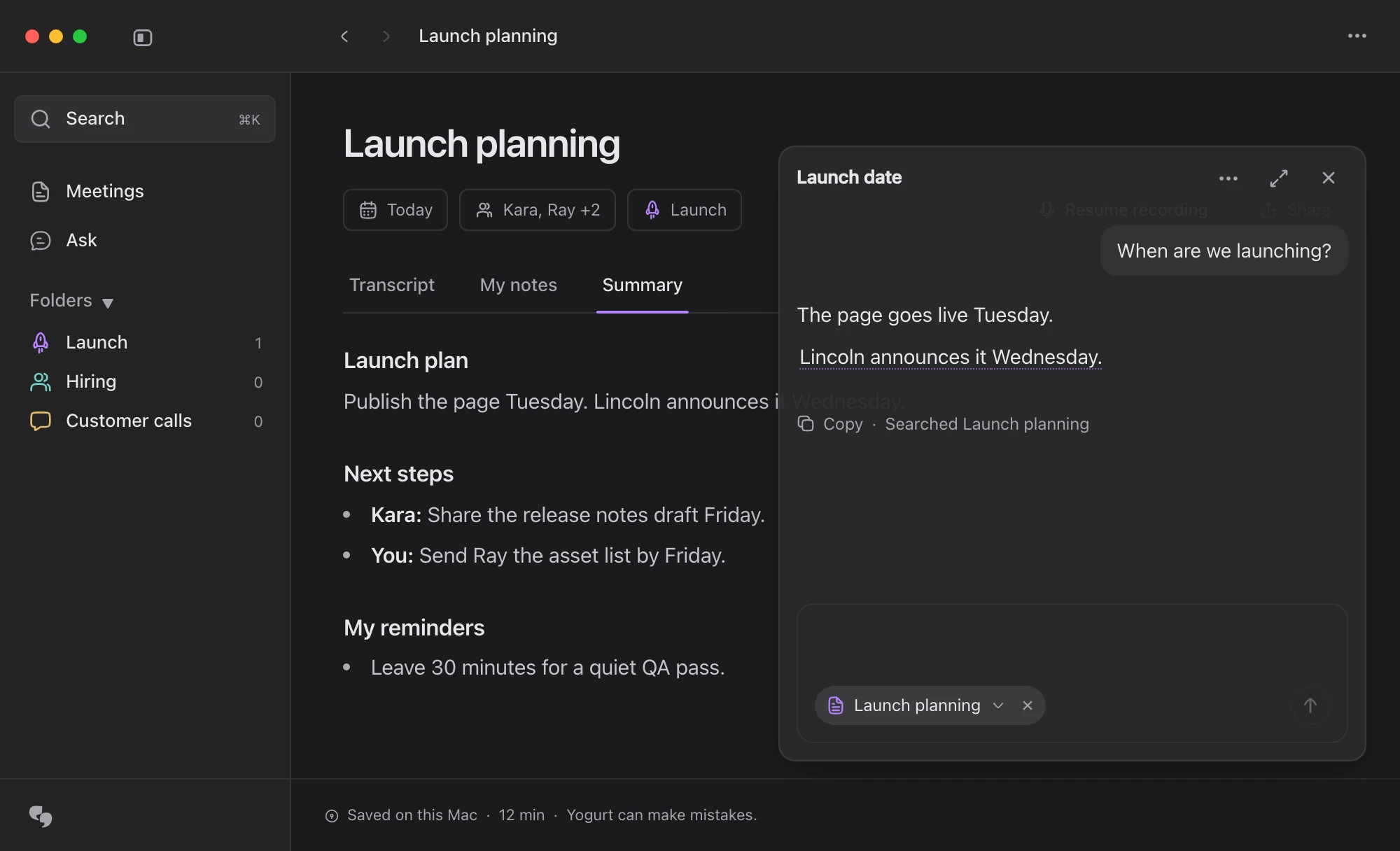
Screenshot from the Yogurt website.
Quiet but still loved
openai/evals
When you change a model or prompt, will it still return the fields your app expects? OpenAI Evals is a Python framework and registry of tests for language models and the systems built around them. It gained 33 stars (+0.2%) to reach 19,784, with 222 days since its last commit in the 23 November snapshot.
Start with the JSON matching template. Take five examples from a structured-output workflow and write down the expected fields and values. Include one case the current prompt gets wrong. Run the same cases before and after your next prompt change.
The template compares parsed JSON values. It is a poor fit for open-ended answers where different wording can be correct. Running the repo's OpenAI-model examples requires an API key and incurs usage costs. The test cases are useful in your existing harness too.
Screenshot from the OpenAI Evals README.
What UI rule do you keep having to explain to your coding agent? If this reached your inbox, reply with one example.
Selection uses paired observations from the 16 and 23 November imports. Risers need 500 stars at both endpoints and fall into three end-date bands (500-9,999, 10,000-49,999 and 50,000+). The new arrival was created within 90 days. The quiet pick has at least 5,000 stars and 180 days without a commit. We exclude earlier features and choose for practical use as well as growth. Read this edition online.
LLMRepos tracks LLM and agent repositories using daily GitHub snapshots.
Get the next edition
Five open-source AI repos worth watching, every Tuesday.
Free weekly digest. Double opt-in, unsubscribe anytime.