
Let your agent read the desktop
Agent Desktop targets named controls, Dossier tailors job applications, and DeepTutor turns your documents into study material.
27 October-3 November 2026. Edition 7. Star counts come from LLMRepos daily snapshots; GitHub counts may have changed.
The button moved. Your automation clicked where it used to be. A script that worked yesterday now needs a small archaeological expedition.
My pick is Agent Desktop. It gives an agent named controls from the operating system's accessibility tree, with references it can act on and check afterwards. Try one harmless task in a notes app: create a note, change its title, then read it back. The useful result is knowing what the agent actually changed.
Also this week: job applications from one career profile, a tutor for your own material, design reviewers with no memory of the meeting, and an older research pipeline worth reading before running.
Moving fastest
AienTech/dossier
Tailoring a CV shouldn't require maintaining twelve slightly different versions of your life. Dossier is a self-hosted job-search app that drafts CVs and cover letters from one profile, then tracks applications. It gained 3,583 stars (+674.8%) to reach 4,114.
Paste one job description and check its match report before generating anything. The maintainer says missing experience appears as a gap; test that with a requirement you deliberately leave out. A more persuasive sentence still needs to be true.
The README describes a single-user desktop-browser app. Local models are supported, but choosing a hosted provider sends it the material used for generation. The Docker image uses Intel/AMD emulation on Apple Silicon. Start with a small profile and check the output yourself.
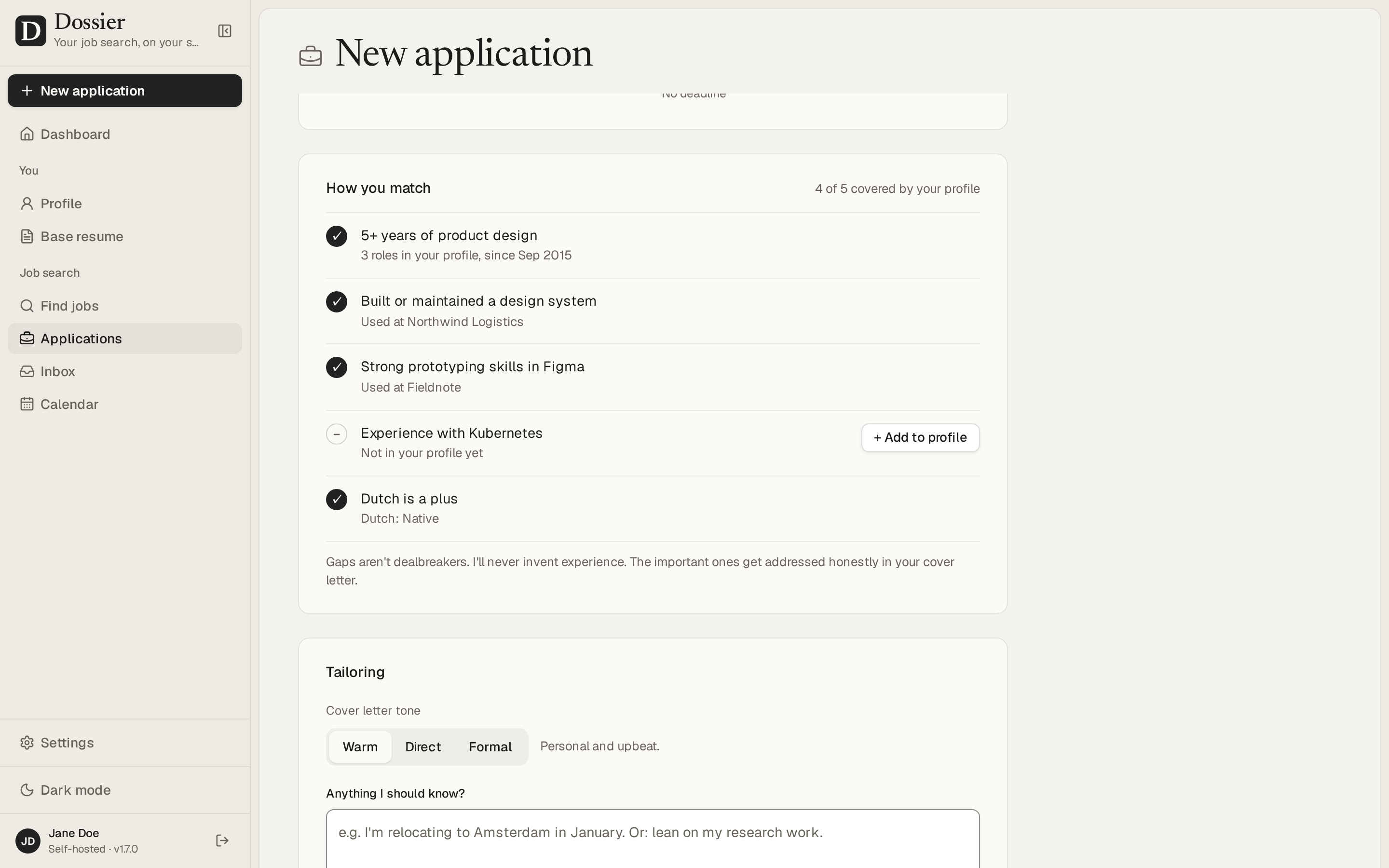
Screenshot: Dossier, using its fictional Jane Doe demo profile.
vercel-labs/agent-desktop
A control with a name gives an agent more to work with than a rectangle at coordinate 640, 480. Agent Desktop is a CLI and C library for reading and operating desktop apps through accessibility APIs. It added 9,199 stars (+504.3%) to reach 11,023, tracked under its earlier lahfir/agent-desktop identity.
Its loop is simple: take a snapshot, act on a control's reference, then inspect again. When a reference goes stale, take another snapshot. For builders automating native apps, that makes a small, repeatable task a useful first comparison with coordinate-based scripts.
Read the platform table: macOS needs Accessibility permission, and Linux support varies between X11 and Wayland. Snapshots can contain private desktop text; the agent you connect determines where that text goes.
HKUDS/DeepTutor
Reading the explanation and knowing the subject are different achievements. DeepTutor combines chat, document-backed answers, practice and learning notes in a configurable workspace. It gained 10,059 stars (+22.6%) to reach 54,503, crossing into our largest band.
Give it one short technical document you know well. Ask for an explanation and three questions, then check the cited passages and whether the questions test the idea rather than its wording. This is a useful trial for onboarding material as well as personal study.
The installation guide distinguishes the full app from the core chat package. Document retrieval needs its own configuration; the full package uses Python 3.11-3.14 and Node 20.9+. Configure models deliberately: running the app yourself does not make every provider local or an answer correct.
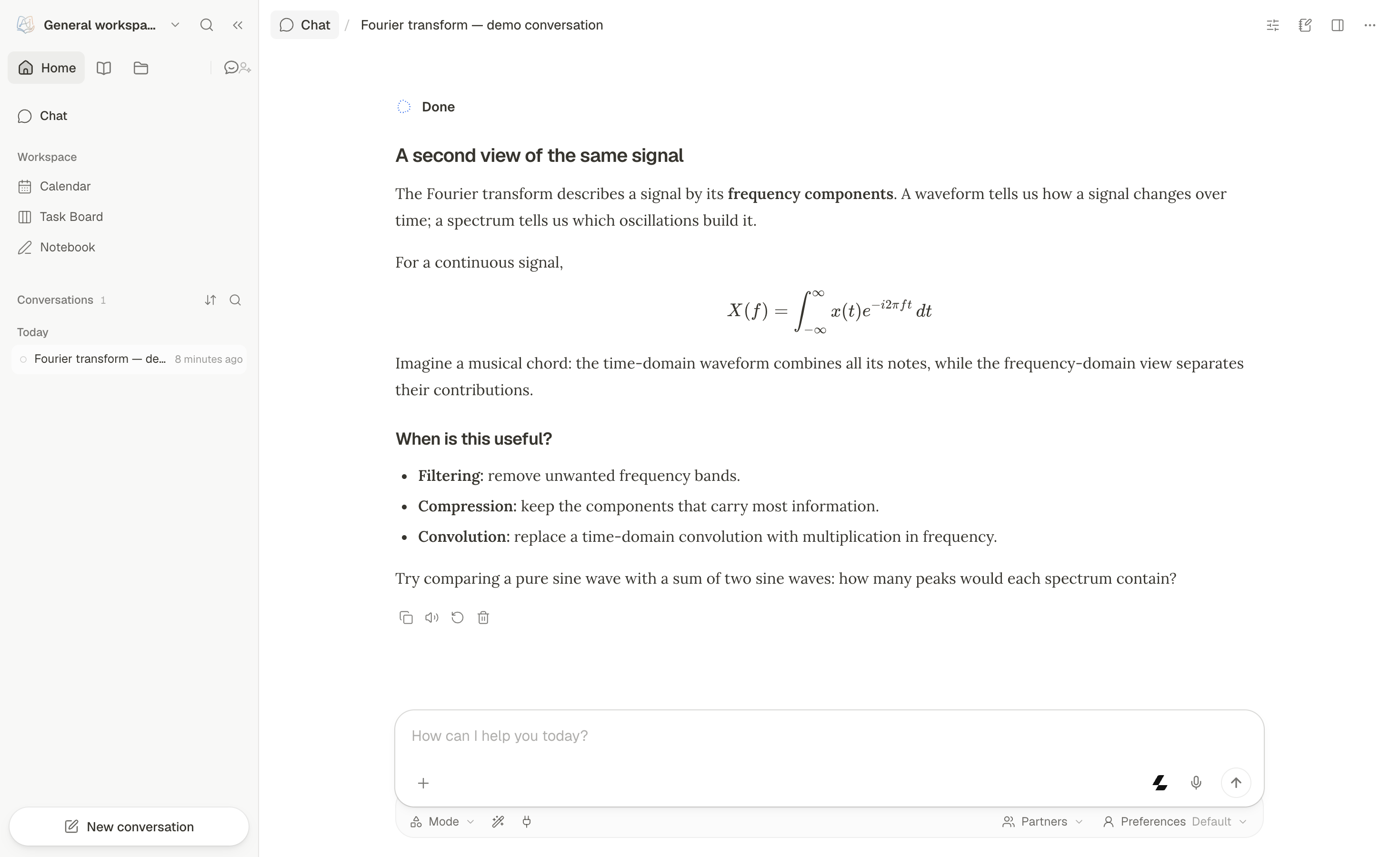
Screenshot: DeepTutor README, showing its Fourier-transform demo conversation.
New arrival
google/elephant-goldfish-model
Everyone in the design meeting knew what “retry” meant. The specification somehow forgot to say. Elephant-Goldfish Model supplies agent workflows for drafting designs with project context, then reviewing them in fresh contexts without the preceding conversation. Created 13 September, it reached 10,825 stars, up 8,937 over the week.
Try it on a feature with one awkward decision: what happens when an event arrives twice? Draft the behaviour, run the review and see whether a reader can implement it from the document and referenced code alone.
The README says reviews stop if the agent cannot create fresh subagents. Keep it for design work that merits the process; a clear, small fix can use your usual workflow. It is not an officially supported Google product, and reviews still need human judgement and tests.
Quiet but still loved
SakanaAI/AI-Scientist
A paper is the last artefact in a much longer chain. The AI Scientist links idea generation, coded experiments, plots, writing and model-generated review through experiment templates. It had 14,928 stars and 319 days since the last commit in the 3 November snapshot, gaining 121 stars during the week.
Start by reading the 2D-diffusion template and following one result into its write-up. For builders designing research agents, the interesting question is where a failed experiment gets caught before it becomes a confident paragraph.
This is a source-available research project with a custom licence. The README targets Linux and NVIDIA GPUs, warns that it executes model-written code, and calls for containerisation and restricted web access. Its licence requires disclosure of AI use in resulting papers. Check older model integrations before running it.
Which desktop task would you trust an agent with if it had to read back every change? If this reached your inbox, reply with one example.
Selection: three risers from distinct end-date star bands (500-9,999; 10,000-49,999; 50,000+), one project created within 90 days and one with at least 5,000 stars and 180 days without a commit. Growth compares paired observations from completed imports on 27 October and 3 November; risers need at least 500 stars at both dates. Previous archive features, duplicate identities and permanent editorial exclusions are removed. Editorial choices weigh practical value alongside growth. Stars measure attention, not quality. Read this edition online.
LLMRepos tracks LLM and agent repositories using daily GitHub snapshots.
Get the next edition
Five open-source AI repos worth watching, every Tuesday.
Free weekly digest. Double opt-in, unsubscribe anytime.